

Driving Forces Behind Toronto’s Real Estate Appeal
One of the most appealing aspects of Toronto’s real estate market is the city’s explosive population growth. As a growing city, Toronto regularly attracts new residents, and demand for housing is rising throughout the GTA. This population growth, coupled with a strong resilience economy, has contributed to home sales and prices have increased.
First-Time Homebuyers Fueling Demand
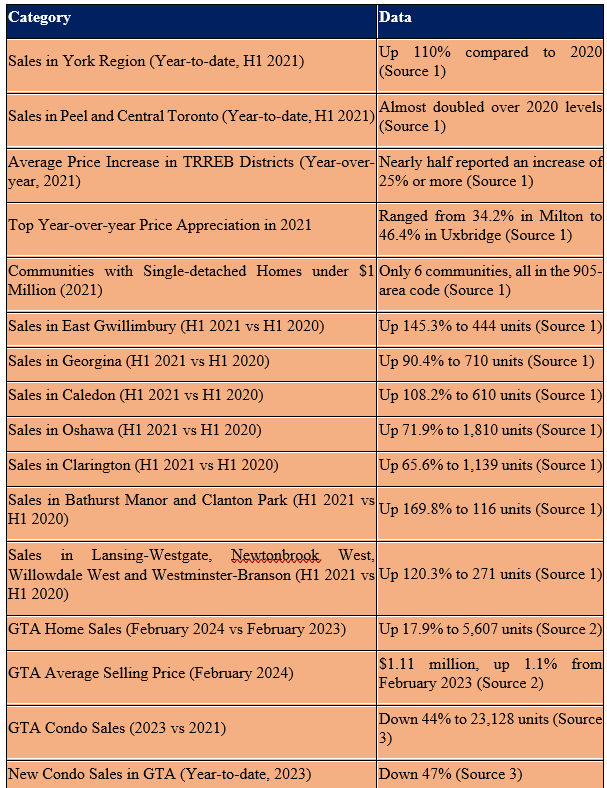
The first-time homebuyer segment has played an important role in driving housing demand in the GTA. Interest rates fell well below 3 percent in the first half of 2021. The supply crisis exacerbated the challenges of purchasing funds. But despite these constraints, the first-time buyers remained determined to become homeowners. They were creating demand for properties as far afield as Durham, Peel, Dufferin County and northern York County. House sales in areas such as East Gwilimbury rose an impressive 145.3% to 444 units in the first half of 2021, compared with 181 units over the same period in 2020.
Move-Up Buyers Driving Central Toronto Market
Buyers who have moved up have also been a driving force behind increased demand for housing in Central Toronto. Existing homeowners have taken advantage of equity and low interest rates to trade in larger homes or neighborhoods closer to town. This trend has contributed to sales has increased dramatically in areas such as Bathurst Manor and Clanton Park (C06). Its sales in the first six months of 2021 at 169.8 % increased to 116 units, compared to 43 units in the same period last year.
Housing Sales and Price Trends
Market Outlook and Forecasts
Investors’ Impact on Condo Market
Investors have a role to play in creating demand for condominiums in the GTA. However, as mortgages come in to renew and interest rates remain high, many investors are forced to liquidate their properties, as they struggle to pay rising costs (Source 3). This could change the condo market development the next year. Condo sales in the GTA appear to be down a whopping 47% year-to-date, according to a November 2023 report by research firm UrbanNation.
Supply Constraints Propelling Demand
Despite high demand, the supply of detached housing in the GTA continues to decline. In June 2021, active listings hit a low of 11,297 units, the lowest June level in at least a decade and 35% of the 10-year average of 17,260 units (Source 1). This inventory limits this stimulated demand and staged an unprecedented market performance and launch. It includes almost half of the 60 TRREB districts experiencing annual price increases of more than 25%. It was with the biggest performer being Uxbridge in the Durham area, where prices rose 46.4%.
Outlook for 2024
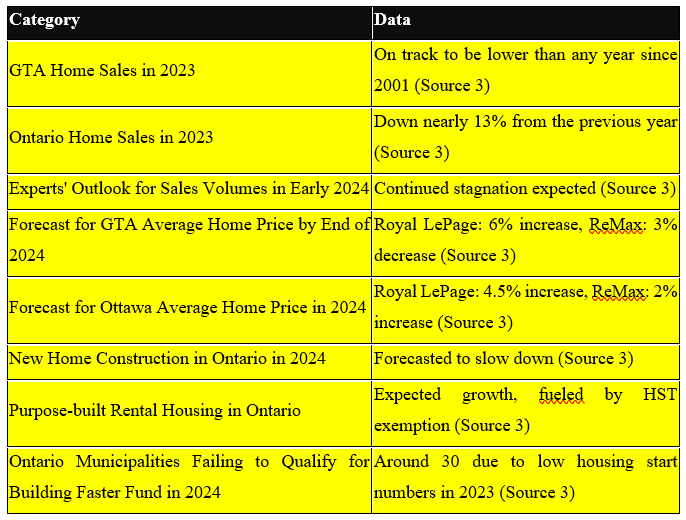
Looking ahead to 2024, experts expect sales volumes to remain volatile, especially in the first half of the year. The number of homes sold GTA in 2023 was lower than in any year since 2001. The region had about 25% less population than it does today. Buyer sentiment is expected and rent prices will play an important role in shaping market dynamics. While some forecasts show modest increases in home prices, such as Royal LePage’s forecast of 6% home price growth in the GTA by the end of 2024. However, others predict a slight decline and Remax predicts an average of prices in GTA 3% decline for 2024.
Conclusion
Toronto’s real estate market continues to captivate buyers and investors, with the city’s vibrant economic climate. It thrives demographics and sustained interest from homeowners as the market meets the challenges of taking stock.