

The Toronto real estate market is showing signs of stress, with rising inventories and sluggish sales hinting at potential trouble ahead. Experts warn of a looming crisis as homeowners and investors face the harsh reality of renewing mortgages in a drastically changed interest rate landscape.
The Perfect Storm
Five years ago, record-low mortgage rates enticed many to invest in Toronto’s booming rental market. Now, as these mortgages come up for renewal, homeowners are confronted with a stark reality. Interest rates have soared, doubling many mortgage payments. These changes have created a perfect storm in Canada’s largest real estate market.
A Flood of Listings
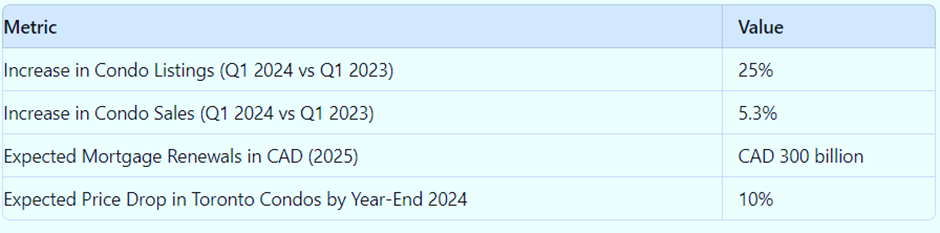
In the condo market in particular, inventory levels are on the rise. In the first quarter of 2024, listings jumped about 25% compared to a year ago. On the other hand, sales are up only 5.3%. This imbalance has created an excess of properties that will take more than five months to sell. It is creating what experts call a “buyer’s market with no buyer”.
The Mortgage Renewal Dilemma
Unlike in the U.S., while homeowners can lock in premiums for 15 or 30 years, the Canadian mortgage systems typically need renewals every 3-5 years. With about CAD 300 billion of mortgages because of renewal next year, many investors are caught between a rock and a hard place. They’re faced with the choice of absorbing significantly higher payments or selling at a potential loss.
Investor Reluctance
Despite the changing market conditions, many property owners are hesitant to lower their asking prices. This reluctance stems from a widespread expectation of profitability that may no longer be realistic in the current market. Experts note that this mindset is particularly evident in the condo market, where inventory has reached historic highs.
The Central Bank’s Role
The Bank of Canada has started to guide interest rates down, with another cut expected in July. However, economists caution that even a significant reduction in the central bank’s rate may have limited impact on mortgage rates. This is because five-year fixed rates are more closely tied to long-term bond yields, which are expected to remain relatively high.
The Potential Fallout
As the situation unfolds, industry insiders are bracing for potential consequences. Some predict a wave of defaults as investors struggle to meet higher payments. Others foresee a significant price correction, with some experts suggesting Toronto condo prices could drop by 10% by year-end. The coming months will be crucial in determining which scenario plays out.
Looking Ahead
As the Toronto property market navigates these choppy waters, all eyes are on how investors and homeowners will respond. Will there be a surge in distressed sales? Or will property owners find ways to weather the storm? The answers to these questions will shape the future of Canada’s biggest real estate market in the months and years to come.