

Pricing Parallels: A Deceptive Similarity
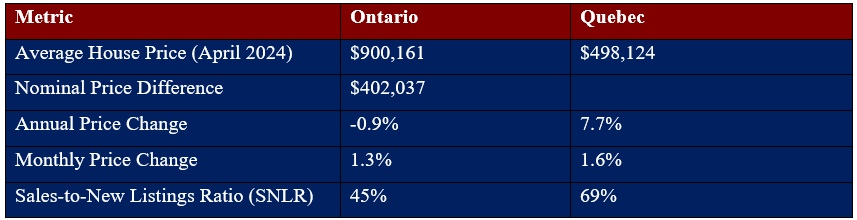
In April 2024, house prices in Ontario and Quebec are remarkably similar. Ontario’s average is $900,161, followed closely by Quebec at $498,124. This nominal difference of just over $2,000 indicates market equality. However, when one examines the data further, we find contradictory findings. These neighboring counties enjoy different real estate options despite comparable prices.
Growth vs. Decline: The Annual Price Change Conundrum
The annual inflation change metric shows significant differences. Quebec has a strong growth rate of 7.7%, reflecting strong market growth. In contrast, Ontario saw a decrease of 0.9%. This distinction is significant. While Quebec homeowners gain more in their share, Ontario appears to lose less. draw theories of parallel markets in these economic superpowers.
Monthly Momentum: Short-term Trends Tell a Tale
Monthly price changes gives insight into instantaneous market dynamics. In Quebec, the upward trend continues with a monthly increase of 1.6%. The annual decline in Ontario also shows an increase of 1.3% per month. These short-term data indicate that the Ontario market is consolidating or perhaps even regressing. However, Quebec’s continued growth in both short-term and long-term metrics underscores its market potential.
Market Dynamics: The SNLR Puzzle
The sales-to-new listings ratio (SNLR) further distinguishes these markets. With an SNLR of 69%, Quebec sits firmly on a seller’s market. Here, salespeople hold more bargaining power. Ontario, 45% SNLR, represents a balanced market. This balance does not give buyers or sellers a clear advantage. This SNLR estimate shows the demand, supply and underlying economic factors shaping each region’s real estate sector.
Economic and Demographic Drivers: The Unseen Forces
The differences are likely due to various economic and demographic factors. Quebec’s robust tech sector and affordable housing initiatives could fuel its growth. The Ontario market may be adjusting to post-pandemic changes or struggling with affordability concerns. Population growth, changes in employment and government policies certainly play a role. Understanding these factors is key for investors, planners and homebuyers as they navigate this complex market.