

Toronto’s real estate market has long been a beacon for homebuyers, investors and real estate enthusiasts. Its growing popularity can be attributed to a combination of factors. These factors can include strong population growth, strong economy and diverse housing options. While exploring the challenges of this dynamic market, we find a fabric woven with fascinating mathematics and insight.
Soaring Housing Prices
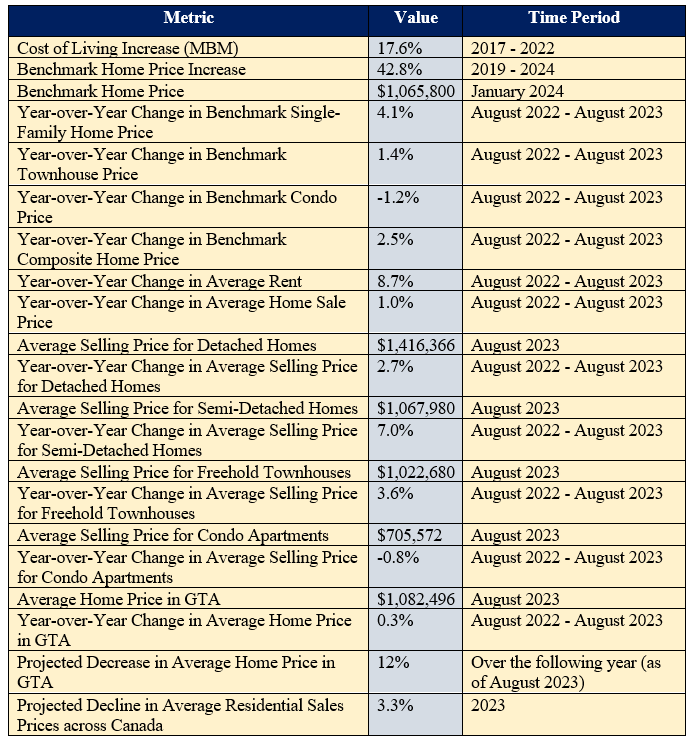
One of the defining characteristics of the Toronto real estate market is the skyrocketing housing prices. Between 2017 and 2022, the city’s benchmark house price increased by 42.8%, outpacing the cost-of-living increase of 17.6% over the same period. This trend for household access has been a challenge for many, especially first-time buyers.
Market Resilience and Growing Sales
Despite rising prices, the Toronto real estate market has proven remarkably resilient. Through January 2024, there is a 37% annual increase in home sales in the area, with 4,223 jobs reported. This increase has prompted the Toronto Regional Real Estate Board (TRREB) to warn that prices may not be sustainable for long, and could mean another spike in prices as the spring market approaches.
Diverse Property Segments
Toronto’s housing market includes a variety of property types, each catering to different buyer preferences and budgets. Residential homes, the cornerstone of the market, experienced a 2.7% annual price increase in March 2023, reaching an average sales price of $1,416,366. Residential and townhouses a share experienced solid growth, with prices up 7% and 3.6%.
Condo Apartment Dynamics
Although the condo apartment segment experienced a slight 0.8% price decline in March 2023 year-on-year. With an average sales price of $705,572, it remains a viable option for urban dwellers and investors looking to buy and be able to buy.
Buyer Demographics
Toronto’s real estate market is driven by a diverse buyer population. Increasing the number of buyers, who demand more space and convenience, has become a major force, often seeking secondary markets such as Mississauga and Brampton. First-time homebuyers, especially millennials, also play an important role, although affordability challenges have weakened their market share. Foreign investors, multi-property owners and immigrants further contribute to heating up the market.
Meteoric Rise of Toronto’s Housing Market
Regional Variations
Each city in the Greater Toronto Area (GTA) exhibits a unique real estate boom. For example, Toronto’s benchmark composite home price rose 2.5% annually in August 2023, to $1,141,400. In contrast, areas such as Brampton and Mississauga experienced price differences, highlighting the importance of local insight.
Future Outlook
While the Toronto housing market is showing signs of cooling off, with GTA home prices expected to fall 12% over the next year, its long-term appeal remains undeniable. Things are like that immigration, economic growth and possible policy interventions targeted are expected to be driven by higher purchasing power.
As Toronto’s real estate market continues to evolve, its growing appeal lies in its ability to adapt to changing market conditions. It also offers differentiated housing options that captivate buyers for a variety of aspirations and budgets. And with its diverse mix of neighbourhoods, Toronto remains a highly sought-after destination for those looking to live or call this vibrant city home.