

Introduction
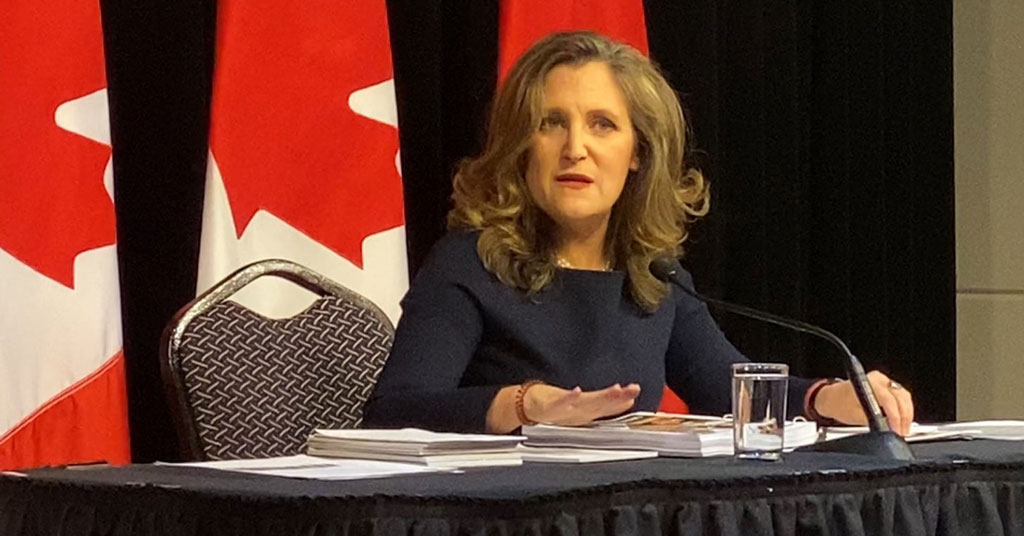
Finance Minister Chrystia Freeland’s latest federal budget unveiled a significant tax hike on the wealthy and corporations. This budget seeks to generate an estimated $21.9 billion in new revenue over the next five years. This budget projects a $40 billion deficit for the 2024-25 fiscal year. This is earmarked for an ambitious $52.9 billion in new spending.
Tackling the Housing Crisis
One of the budget’s centrepieces is an $8.5 billion commitment to tackle the housing crisis. This has left many young Canadians struggling to attain homeownership. The government aims to drive the creation of approximately four million new homes by 2031. This can be done through a range of initiatives such as increased funding for municipalities. On the other hand, the Canadian government can focus on the development of homes on underutilized public lands and the provision of loans to spur rental construction.
Chrystia Freeland: “We are moving with purpose to help build more homes, faster. We are making life cost less.”
Taxing the Wealthy
To fund these ambitious spending plans, the government has turned its attention to the wealthiest Canadians and corporations. The most significant revenue-generating measure is an increase in the capital gains inclusion rate from 50% to 66.67% for individuals with capital gains exceeding $250,000 per year and for all capital gains realized by corporations and trusts.
Armine Yalnizyan, Atkinson Fellow on the Future of Workers, views this move as an attempt by the Liberals to reclaim millennial voters who may have been attracted to the Conservative Party’s early focus on housing affordability.
Debt Servicing Costs Soar
While the government aims to keep the deficit in check through better-than-expected economic growth and higher taxes, the cost of servicing Canada’s growing debt pile is a cause for concern. With interest rates at a 20-year high, Ottawa’s cost to borrow has spiked from $20.3 billion in 2020-21 to $54.1 billion in 2024-25, surpassing the amount spent on health care.
Sahir Khan, former deputy parliamentary budget officer, warns that the interest rates are “hurting the government just as much as they’re hurting us consumers,” and the growing debt servicing costs could potentially squeeze other program spending in the future.
Other Spending Priorities
In addition to housing initiatives, the budget includes a $6 billion Canada Disability Benefit, a $1 billion national school food program, and a $500-million fund for youth mental health. These measures shows the government’s commitment to address critical social issues and supporting vulnerable populations of the country.
Balancing Act
The government navigates its ambitious spending plans. Therefore, it must strike a delicate balance between addressing pressing societal needs and maintaining fiscal responsibility. The decision for increasing taxes on the wealthy and corporations reflects a philosophical stance. This reflection can include wealth redistribution.
Conclusion
Chrystia Freeland’s “fair” budget represents a bold attempt to solve Canada’s housing crisis. It also bolsters social programs through substantial new spending. It is provided by tax increases funded by the wealthy and part of the corporate sector. The Canadian government’s commitment to address critical issues is commendable. The long-term implications of rising borrowing costs and their potential impact remain a concern. Canadians will be watching closely how the government can deliver on its promises while maintaining fiscal prudence.