

Overview of Ottawa’s Housing Market
In June 2024, the Ottawa real estate market presents a mixed picture across property types. Single-family homes, townhouses, and condominiums each show distinct trends in price and volume. This diverse landscape provides insight into the city’s housing dynamics, reflecting broader economic trends and changing consumer preferences. Understanding these factors is important for buyers, sellers and investors entering the Ottawa real estate market.
Single-Family Detached Homes: Price Dip, Sales Surge
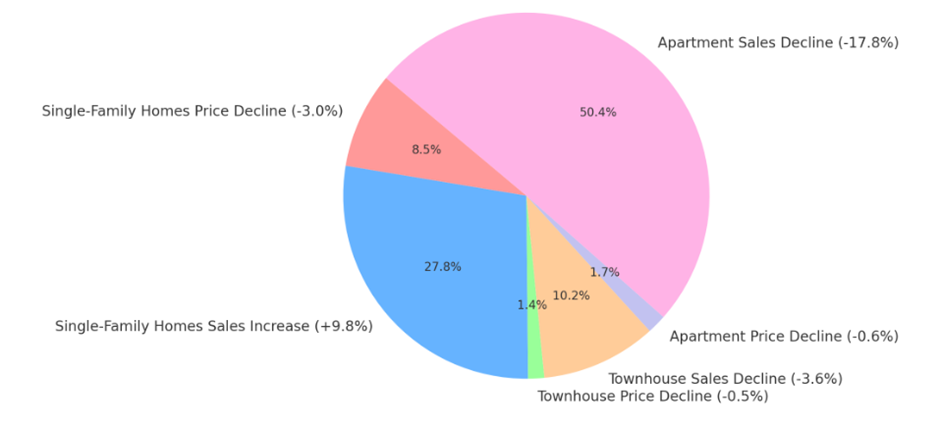
There was an interesting change in Ottawa single-family housing in June 2024. While the average price fell 3.0% compared to June 2023 to $829,302, the number of housing units sold increased by a whopping 9.8 %, was 772 affordable homes. This combination of higher sales indicates a change in the market that may be attracting more buyers. It could mean a short-term buyer’s market or a reappraisal of home prices in this phase.
Townhouse Market: Slight Declines in Both Price and Sales
Ottawa’s townhouses show a slight decline in both prices and sales. The average townhouse price stood at $553,742, a slight decline of 0.5% from June 2023. There was also a slight 3.6% decline in the number of units sold, with 454 townhouses changing hands. This sector seems to be gaining easy cooling, possibly by consumers. This is due to changes in priorities or economic factors affecting mid-market housing.
Apartment Market: Pricing Steady, Sales Volume Drop
The Ottawa housing market presented an interesting contrast in June 2024. While the average price remained relatively stable at $455,939, down just 0.6% from a year ago, it dropped a whopping 17.8%. in the number of units sold, with 208 units sold. Despite higher prices, this sharp decline in sales volume could be affected by changing consumer preferences or the economic specialty housing sector.
Comparative Analysis: Property Types and Market Dynamics
The comparison of three types of property highlights different market dynamics. Sales rose despite falling prices for single-family homes, indicating high demand. Townhouse prices and sales fell slightly, indicating a balanced market. Properties faced a sharp decline in sales volume despite maintaining strong prices. These changes highlight the complexity of the Ottawa real estate market and the need for nuanced understanding based on property type.
Factors Influencing Ottawa’s Real Estate Trends
Several factors can influence these factors in the Ottawa real estate market. Post-pandemic economic conditions, interest rates, and changes in employment all play a role. Despite falling prices, rising sales of single-family homes may reflect a desire for more space. The declining apartment sales could indicate a pullback from urban areas living or investment. These factors provide valuable insights into broader socioeconomic variables affecting housing preferences.
Implications for Buyers, Sellers, and Investors
These market trends have crucial implications for different stakeholders in the Ottawa real estate market. Buyers are finding opportunities in the single-family home segment, with lower prices and higher availability. Sellers may need to adjust their expectations due to the decline in sales volume. Investors should carefully consider the developments in different properties. Overall, the data suggest a small market that requires careful analysis and informed decision-making by all stakeholders.